How to sell on GeM: seller registration to first order
An end-to-end playbook on how to sell on GeM: deciding fit, seller registration, catalogue vs bids, MSME benefits, and winning your first order.
The government is the single largest buyer in India, and GeM is the front door to it. Almost every central ministry, public sector unit, state department and government school now buys through gem.gov.in — office chairs, laboratory equipment, housekeeping services. If you make or supply almost anything, there’s a buyer for it on GeM right now. The catch: the platform was built for procurement officers, not sellers, and it assumes you already know how it works.
So here’s the complete playbook for how to sell on GeM, in the order you’ll actually hit each step, with the parts that matter and the parts you can ignore.
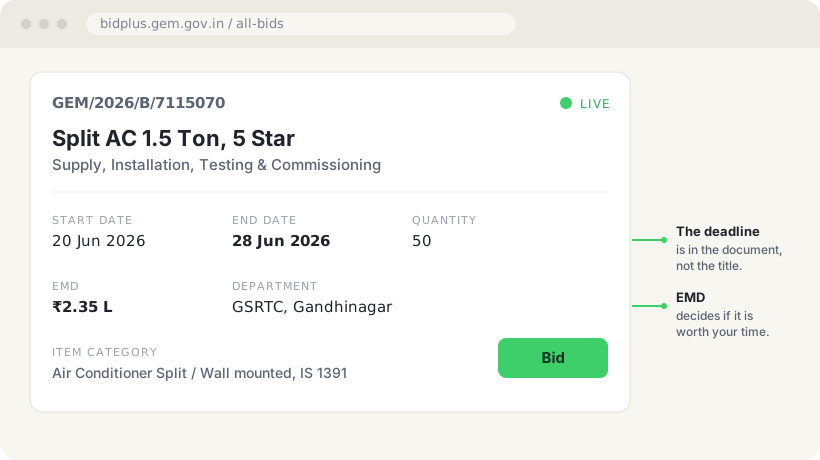
What a live bid looks like on GeM. This is the screen you’ll come to know well.
First, decide whether GeM is even for you
Before you spend a day on registration, be honest about fit. GeM is a genuinely good channel if government departments buy your product or service in volume, you can supply against a fixed specification, and you can wait out a payment cycle that’s reliable but not always fast.
It’s a poor fit in two cases. If your margins are razor thin, because the bid side runs on reverse auctions that push prices down. Or if you can’t hold delivery to spec and timeline, because GeM contracts are enforceable and a bad delivery record follows you.
The other honest point: selling to government is a long game. Your first order may take weeks. Your tenth is routine. People who quit do so in the first month, before the system starts paying off.
Get registration right the first time
The GeM registration process is more about consistency than complexity. The platform verifies you against government databases, so any mismatch stops you cold.
You’ll need, broadly:
- PAN of the business (or the proprietor, for a proprietorship)
- GST registration, with the legal name exactly matching the PAN
- A bank account in the business name, again matching PAN and GST
- Udyam registration if you’re an MSME — get this, I’ll explain why it’s worth real money later
- An authorised signatory with an Aadhaar-linked mobile, plus a DSC (digital signature certificate) for many actions
The single most common reason GeM seller registration fails or stalls is a name mismatch between PAN, GST and bank account. A trailing “Pvt Ltd” in one place and “Private Limited” in another is enough to cause trouble. Fix this before you start, not after. I’ve written a step-by-step GeM registration guide if you want each screen walked through.
Treat your seller profile as a living asset
You register at gem.gov.in as a seller, choose your organisation type (proprietorship, partnership, LLP, company, and so on), complete the verification, and create your seller profile. Don’t rush this part. The turnover figures, experience details and documents you load here get reused on every bid, and a half-finished profile costs you eligibility later.
For a fuller list of what to gather, see the documents you need for government tenders — getting them ready once saves you from scrambling on every single bid.
The two ways to sell, and which one to start with
This is where most new sellers get confused, so be clear about it. On GeM you sell in two completely different ways.
Catalogue, or direct purchase: you list your products against the right category, with specifications, price and images, the way you would on an e-commerce site. Buyers below a certain value threshold can purchase directly, or run a quick comparison between a handful of listed sellers. This is steady, lower-ticket, lower-effort volume.
Bids and reverse auctions — the BidPlus side. For larger requirements, a buyer floats a bid on BidPlus. Multiple sellers respond with a technical bid and a financial bid, the qualified ones often go into a reverse auction, and the lowest compliant bidder wins. This is where the serious volume sits, and it’s what most people mean when they say “GeM tenders”.
| Catalogue (direct) | Bids / reverse auction | |
|---|---|---|
| Effort to start | List once, then maintain | Respond per bid |
| Typical order size | Smaller | Larger |
| Competition | Comparison of listed sellers | Open reverse auction |
| Best as | Your steady base | Your growth engine |
My advice: do both, but start with the catalogue. Listing your products gets you live, earns you a delivery record, and teaches you how the platform behaves with low stakes. Then move into bids once you understand the rhythm. If you want the full mechanics of the second route, I’ve laid out the GeM bidding process end to end separately.
A catalogue listing that actually sells
A weak listing is invisible. Three things decide whether yours gets bought.
The right category. GeM categories are specific, and if you list under the wrong one, the buyers looking for your product never see you. Spend time finding the exact category that matches what you sell.
Honest, complete specifications. Buyers filter and compare on spec fields. If a GeM category maps to an IS standard and your product meets it, claim it and be ready to prove it. If it doesn’t, don’t claim it — a single inspection failure on delivery is far more expensive than a lost sale.
And a price you can hold. Your listed price is a commitment. Quote one you can supply at consistently, not a teaser you’ll regret.
The MSME advantage you should not leave on the table
Here’s the point I promised. Registered micro and small enterprises get real, structured preferences on GeM: exemption from earnest money deposit (EMD) on bids, purchase preference, and in many cases relaxed turnover or prior-experience conditions. These aren’t vague goodwill gestures. They’re written into procurement policy.
But the benefit only applies if you’ve linked your Udyam registration and you claim it correctly on each bid. I see sellers who qualify for EMD exemption arrange a bank guarantee anyway, simply because they didn’t read the bid carefully. If you’re an MSE, this is the cheapest competitive edge you’ll ever get. Use it. (If you’re not sure which MSME band you fall in, check the 2025 classification rules before you assume.)
Your first bid and your first order
Read the bid document before you get excited
Once you’re comfortable, move to BidPlus. The discipline is straightforward even if the platform is fiddly. When a bid is published, open the bid document and check four things:
- The exact item and specification (including any IS standard).
- The eligibility conditions (turnover, past experience, OEM authorisation).
- The quantity, delivery location and timeline.
- The financials — EMD, performance guarantee, and whether the price is workable after all charges.
Most bids will fail one of these for you, and that’s a good thing. It saves the effort of a response you can’t win or can’t deliver. For the ones that fit, you upload a technical bid that proves every eligibility claim with an attached document, and a financial bid with your price.
The rule that gets first-timers out is simple: one missing mandatory document disqualifies you, no matter how good your price is.
Hold your floor in the reverse auction
If there’s a reverse auction, decide your floor price before it starts and don’t move below it. Reverse auctions are engineered to push prices down, and winning a contract you lose money on is worse than not winning. I’ve gone deeper on reverse auction strategy for GeM if that’s your next hurdle.
Then comes the part that actually builds your business: supply on time, to spec, pass inspection, get paid. A clean delivery record on GeM compounds. Every order makes the next bid easier to win and your catalogue easier to trust.
The one problem that quietly limits everyone
Registration, cataloguing and bidding all become routine after a handful of cycles. The part that never becomes routine on its own is finding the right bids early enough to prepare a clean response. Relevant requirements for your category and your state get published, stay open for a short window, and close — whether or not anyone on your team thought to check that day.
Most sellers lose far more to bids they never saw than to bids they bid badly.
That’s the only piece of selling on GeM I’d genuinely automate from day one. The bidding judgement — whether the spec fits, whether the price works — stays yours. The finding, you should never have to do by hand again.
Frequently asked questions
Is GeM worth it for my business?
GeM is a good channel if government departments buy your product or service in volume, you can supply against a fixed specification, and you can wait out a reliable but not always fast payment cycle. It's a poor fit if your margins are razor thin or you can't hold delivery to spec and timeline.
What documents do I need to register as a GeM seller?
Broadly: the business PAN, GST registration with the legal name exactly matching the PAN, a bank account in the business name matching PAN and GST, Udyam registration if you're an MSME, and an authorised signatory with an Aadhaar-linked mobile plus a DSC for many actions.
Why does GeM registration fail or stall?
The single most common reason is a name mismatch between PAN, GST and bank account. Even a trailing 'Pvt Ltd' in one place and 'Private Limited' in another is enough to cause trouble, so fix this before you start.
Should I start with catalogue listing or bidding on GeM?
Start with the catalogue. Listing your products gets you live, earns a delivery record, and teaches you how the platform behaves with low stakes. Move into bids once you understand the rhythm.
What MSME benefits do I get on GeM?
Registered micro and small enterprises get EMD exemption on bids, purchase preference, and in many cases relaxed turnover or prior-experience conditions. These are written into procurement policy, but only apply if you link your Udyam registration and claim it correctly on each bid.
What should I check before responding to a GeM bid?
Open the bid document and check four things: the exact item and specification including any IS standard, the eligibility conditions like turnover, past experience and OEM authorisation, the quantity, delivery location and timeline, and the financials — EMD, performance guarantee, and whether the price is workable after all charges.